
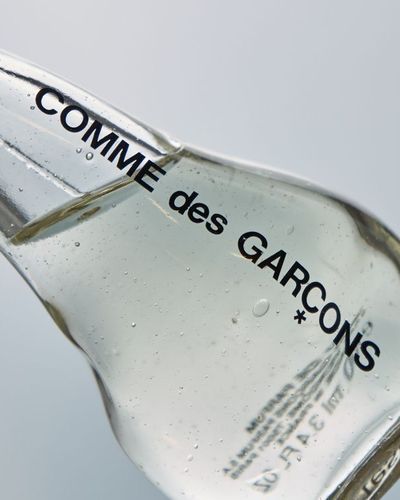
gg
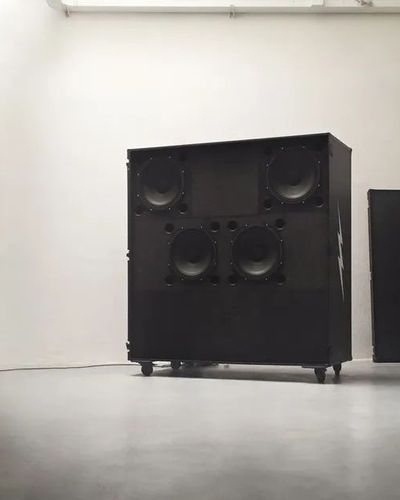
ghghg
YYYG.
SIGNAL TO NOISE RATIOS
Thomas Hibbert & Sons
Lorem ipsum dolor sit amet, consectetur adipiscing elit. Ut nisl metus, accumsan id eros id, vehicula tincidunt nisl. Nulla sit amet urna ut mi tempor euismod. Fusce elementum sapien eget elit sodales fringilla. Pellentesque et nulla vel velit malesuada fermentum vitae vitae justo. Nulla dignissim volutpat interdum. Pellentesque at molestie tortor. Proin magna ante, fermentum ac elementum at, lacinia et arcu.
Ut volutpat pharetra orci, ac bibendum nunc vulputate in. Praesent porttitor venenatis lacus sed mollis. Nulla varius leo nec porta tempus. Nunc orci enim, bibendum in gravida eu, pretium eu purus. Sed vestibulum quam
Ut volutpat pharetra orci, ac bibendum nunc vulputate in. Praesent porttitor venenatis lacus sed mollis. Nulla varius leo nec porta tempus. Nunc orci enim, bibendum in gravida eu, pretium eu purus. Sed vestibulum quam. Ut volutpat pharetra orci, ac bibendum nunc vulputate in. Praesent porttitor venenatis lacus sed mollis. Nulla varius leo nec porta tempus. Nunc orci enim, bibendum in gravida eu, pretium eu purus. Sed vestibulum quam Ut volutpat pharetra orci, ac bibendum nunc vulputate in. Praesent porttitor venenatis lacus sed mollis.
Lorem ipsum dolor sit amet, consectetur adipiscing elit. Ut nisl metus, accumsan id eros id, vehicula tincidunt nisl. Nulla sit amet urna ut mi tempor euismod. Fusce elementum sapien eget elit sodales fringilla. Pellentesque et nulla vel velit malesuada fermentum vitae vitae justo. Nulla dignissim volutpat interdum. Pellentesque at molestie tortor. Proin magna ante, fermentum ac elementum at, lacinia et arcu.
go do that
Phase 1: Discovery & Research
Every great product starts with understanding the problem it's trying to solve. For EcoTrack, our challenge was creating an engaging way for users to track their environmental impact without feeling overwhelmed by guilt or complex data.
gg
ghghg
The Whole Foods Cheat Sheet
If it has more than 5 ingredients, if you can't pronounce half of them, or if it promises to 'boost your energy with natural flavors' – it's probably not whole food. Real food doesn't need a marketing department.
| Food | Benefit |
|---|---|
| Frozen berries, canned beans, plain yogurt | Retains most nutrients, minimal additives |
| Whole grain bread, cheese, canned tomatoes | Still nutritious, convenient options |
| Breakfast cereals, flavored yogurts, deli meats | Convenience vs. nutrition trade-off |
| Pop-Tarts, instant noodles, soda | Convenience, long shelf life, questionable nutrition |
Lorem ipsum dolor sit amet, consectetur adipiscing elit. Sed do eiusmod tempor incididunt ut labore et dolore magna aliqua. This video demonstrates the visual design process and key decisions that shaped the final product experience.
User Interviews
I began by conducting interviews with 12 potential users across different demographics, focusing on their current habits and attitudes toward sustainability. These conversations revealed a crucial insight: most people wanted to make environmentally friendly choices but felt paralyzed by the complexity of calculating their impact.
"I care about the environment, but I have no idea if using a paper bag is actually better than plastic, or if my reusable water bottle makes any difference." — Interview participant
Competitive Analysis
Next, I analyzed existing sustainability apps, creating a feature comparison matrix to identify gaps and opportunities. Most competitors focused on carbon footprint calculations but failed to provide actionable guidance or positive reinforcement.
Defining Success
Before opening Figma, I collaborated with stakeholders to define clear success metrics:
- Increase daily active usage by 40%
- Improve user-reported understanding of environmental impact
- Drive measurable behavior changes in at least two sustainability categories
Phase 2: Ideation & Conceptualization
With a solid understanding of the problem space, I moved into the creative phase of the process.
Sketching
I always start with pen and paper, rapidly exploring different approaches without the constraints of digital tools. For EcoTrack, I filled three sketchbooks with concepts ranging from gamified experiences to data-heavy dashboards.
Information Architecture
Based on research insights, I developed a user-centered information architecture that prioritized simplicity and actionable information:
- Dashboard — Personalized overview with immediate impact insights
- Daily Tracker — Simple logging of activities with immediate feedback
- Impact Journey — Visualization of progress over time
- Action Center — Customized recommendations based on user behavior
Design Principles
I established four core design principles to guide all decisions:
- Simplify complexity — Translate environmental impact into understandable units
- Celebrate progress — Focus on positive reinforcement rather than guilt
- Enable informed choices — Provide context for decision-making
- Design for habit formation — Create satisfying interaction loops
Phase 3: Prototyping & Testing
With the conceptual framework in place, I moved into the iterative cycle of prototyping and testing.
Low-Fidelity Wireframes
I created wireframes focusing on user flows and information hierarchy, deliberately keeping the visual design minimal to focus feedback on functionality and structure.
User Testing (Round 1)
Testing wireframes with 8 participants revealed several key insights:
- Users wanted more immediate feedback when logging activities
- The impact visualization wasn't intuitive for most users
- People were confused by technical environmental terminology
Mid-Fidelity Prototypes
Based on testing feedback, I refined the concept and developed interactive prototypes with more visual detail, focusing on:
- Simplified data visualization using familiar metaphors
- Immediate positive reinforcement for logged activities
- Progressive disclosure of more complex environmental information
User Testing (Round 2)
A second round of testing showed significant improvements in usability, but highlighted new challenges:
- Users wanted to compare their impact with friends or community averages
- Weekly summaries were more motivating than daily statistics
- The onboarding process felt too lengthy
Visual Language
I developed a visual language that balanced approachability with credibility:
- A nature-inspired color palette with clear functional color coding
- Custom iconography that simplified complex concepts
- Typography that prioritized readability across devices
- Micro-interactions that provided satisfaction and reinforcement
Design System
To ensure consistency and facilitate development, I created a comprehensive design system including:
- Component library with documented states and behaviors
- Responsive layout guidelines
- Animation specifications
- Accessibility standards
Final Prototype
The final prototype brought together all elements into a cohesive experience, which we tested with a broader user group before moving to development.


Sarah Chen
Product Director at Bloom Finance

Alex Rodriguez
Engineering Lead at TechCorp
Phase 5: Implementation & Iteration
The design process doesn't end when development begins—it evolves.
Developer Collaboration
I worked closely with developers throughout implementation, participating in code reviews and adjusting designs to address technical constraints while preserving the core experience.
Analytics Implementation
We integrated analytics to track our success metrics, setting up dashboards to monitor key interactions and user journeys.
Post-Launch Iteration
After launch, we established a regular cycle of analysis and iteration:
- Weekly reviews of user feedback and behavior data
- Bi-weekly design sprints to address emerging issues
- Monthly feature planning based on usage patterns
Thomas G. Hibbert
Soft
Spoken
Studio
Word on These Streets
Six years without telling on em
Copywriting & Video Production
Seesh with No Accent
Published by Hibbert & Sons, Boston 2025

Video Production
Copywriting
Professional Experience
2020-2023
2018-2020
2015-2018
Sarah Chen
Product Director at Bloom Finance
Alex Rodriguez
Engineering Lead at TechCorp
Results & Learnings
Six months after launch, EcoTrack has exceeded our initial success metrics:
- 52% increase in daily active usage
- 78% of users report better understanding of their environmental impact
- Average user has adopted 3.4 new sustainable habits
The most valuable lesson from this project was the importance of making abstract concepts tangible. By translating complex environmental data into personal, actionable insights, we created an experience that not only educated users but empowered them to make meaningful changes.
Conclusion
Effective product design is never a linear journey—it's a continuous cycle of learning and refinement. By staying focused on user needs while maintaining a flexible approach to problem-solving, we can create products that not only meet business objectives but genuinely improve people's lives.
I'd love to hear about your own design process and how you approach similar challenges. Feel free to reach out with questions or share your experiences in the comments below.